By Ricky Sowards, DeHaven's Transfer & Storage
If you are reading this, you have probably just inherited a lab move. Maybe you are a PI relocating your group to a new building, maybe you are a lab manager whose department is consolidating, maybe you are a biotech moving out of incubator space and into your own facility. Whatever the situation, you are about to coordinate a project that is part logistics, part regulatory paperwork, part personnel management, and part trying to keep your science moving while half the building is in boxes.
We have been moving labs across the Triangle for a long time, and the first thing we will tell you is this: a lab move is not a big residential move, and it is not a big office move either. It is its own thing, and the planning that has to happen before the truck arrives is the difference between a smooth transition and a six-month recovery.
This post is the honest version of what you need to know. There is a printable checklist linked at the end, the one we would want a lab leader to have taped to their wall the day they start planning.
What "lab specialists" actually means
Before any of the substance, a word on what makes a mover qualified to do this work. The lab-relocation space has a lot of generic moving companies who add "we move labs too" to their service list and a lot of national specialists who do nothing else. We sit in a particular place: a 75-year-old Triangle commercial mover with deep, hands-on experience in lab relocations across the local research community, Duke, UNC, NC State, and the biotech and contract research labs throughout RTP. Local presence, established crews, and real lab experience are not the same thing as a national contractor flying in for the week.
The clearest example of what that experience looks like in practice: a vibration-isolation optical table relocation at a major Triangle research university. These tables float a heavy steel tabletop on pneumatic legs to dampen building vibration, which is what makes them indispensable for laser, microscopy, and precision-measurement work, and what makes them deeply unforgiving to move. You cannot tip one. You cannot bang it through a doorway. And in this case, you could not get it through a doorway at all. The right move was to remove a section of wall, bring the table out level, transport it, and put the wall back. We did, and the lab was operational on schedule.
That is what lab specialist means. Not a service line in a brochure. The crews, the planning depth, and the willingness to do what the equipment actually requires.
Start earlier than you think
The single most common mistake we see is starting too late. A residential move comes together in four to six weeks. An office move in eight to ten. A research lab, done properly, takes at least six months of planning, and nine to twelve for anything large, highly regulated, or institutional.
The reason is not the moving itself. The moving is the last few days. The preceding months are about inventories, vendor coordination, regulatory transfers, equipment decommissioning schedules, EHS clearances, and getting the new space ready to receive you. Almost none of that can be rushed, and several pieces have to happen in a specific order. If you start eight weeks out, you will compress every one of those steps into a stress spike that costs you science.
Start the conversation with your mover at the same time you start planning internally. A good lab mover will sit down with you six months out, walk both spaces, and help you build the schedule backward from your target move date. That walkthrough is also when you find out what is actually a moving problem versus what is your problem, which matters more than you would think.
Know where the line is between your mover and everyone else
Here is the honest framing, and it is worth understanding before you start hiring anyone.
A professional lab mover handles the physical relocation: assessment, planning, crating, packing, padding, lifting, transit, installation, and placement of your equipment and inventory in the new space. We are responsible for getting your things from point A to point B intact, on schedule, with appropriate valuation coverage on the equipment we touch. We do this every week.
A professional lab mover does not handle the regulatory side. Specifically:
Biosafety cabinet decontamination and recertification.
Per NSF/ANSI Standard 49, a biosafety cabinet must be decontaminated by a certified vendor before relocation if it has been used with infectious materials, and recertified after installation at the new location, every time, even if it only moved across the same room. Lead times for decontamination are typically 30 days minimum, and recertification has to be scheduled in advance. This is its own vendor track, separate from the mover, and it has to be on your timeline from the beginning.
Fume hoods and laminar flow hoods.
Similar story: decommissioning before the move, recertification and airflow validation after.
Hazardous chemical transfers above small quantities.
Anything DOT-regulated or controlled is typically handled by a specialized chemical relocation vendor, not a general mover. The same applies to radioactive materials, which require licensed handlers.
Controlled substances.
DEA Schedule materials cannot just be packed onto a truck. They require DEA Form 222 transfers and specific custody documentation.
Live animals.
Coordinated through your IACUC and an approved animal transport vendor, not a moving company.
Biological samples in cryogenic storage.
The freezers are a mover problem (more on this below). The samples themselves, especially anything regulated, may need their own chain of custody handling.
A good lab mover will tell you this clearly and help you sequence the regulatory work around the physical move. A mover who promises to handle all of it themselves is either misunderstanding what you have, or about to cause you a serious problem. Ask the question directly when you interview movers, and watch how they answer.
The pitfalls that actually trip people up
After enough lab moves, the same problems repeat. Here are the ones worth flagging before you commit to a plan.
The new space is not actually ready
This is the number one cause of lab-move chaos, and it has nothing to do with the moving itself. The building told you the lab would be ready August 1. It is August 5, the truck is loaded, and the gas lines are not connected. Or the 208V outlets the ULT freezers need are not installed. Or the fume hood ventilation passed inspection but the deionized water lines did not.
Build a verification step into your timeline. Two weeks before the move, someone from your team physically walks the new space and confirms that power (including specialty voltages), water (including DI), gas, vacuum, compressed air, ventilation, casework, and IT are actually in place, not "scheduled to be." A small but real example we have seen: a freezer cord that was not long enough to reach the outlet in the new layout. The kind of detail that takes thirty minutes to fix if you catch it two weeks out, and creates real sample risk if you discover it on move day.
If the space is not ready, you adjust the move date then, not on the day.
The freezers
Minus-eighty freezers and liquid-nitrogen storage are the equipment that causes the most stress, because the consequence of getting it wrong is destroyed samples that cannot be regenerated. This has happened publicly and badly: in 2012, the Harvard Brain Tissue Resource Center lost 150 stored brain samples to a freezer failure, including a significant portion of the world's largest autism brain collection. Freezer accidents during moves and after them happen, they are not rare, and the cost is years of research.
Plan freezer logistics separately and earlier than everything else. The basic choices are:
Powered transport.
The freezer stays plugged in to a generator-equipped truck for the entire move. Temperature is monitored continuously, typically with a ±5°C alarm tolerance. This is the standard for short-distance ULT moves and is what we use for most Triangle relocations.
Unpowered with dry ice.
Pack-out with dry ice for shorter holds. Works for some short moves, requires very strict timing.
Sample transfer first.
Move samples to a temporary host freezer (a collaborator's lab, a core facility, or rental capacity) before the freezer itself moves, then move them back after the original freezer is reinstalled and at temperature at the new site. Slower but lower risk.
Anti-static handling.
ULT freezer surfaces can build static charge during transit. For the most sensitive samples, anti-static bubble wrap and grounded handling matter.
The decision on which approach you use is made in the first month of planning, not the last. And it is made jointly with the mover who will actually be running the freezer logistics, because the answer depends on the equipment, the route, the timing window, and what backup capacity exists at the destination.
The inventory you never made
Most labs operate with an informal mental model of what is in which cabinet. That works fine until everything has to be packed, moved, and reassembled at the other end. Without an inventory done before packing, you will spend weeks at the new lab trying to find things, you will not notice when something is missing until you need it, and your valuation coverage on damaged items is much harder to enforce because you cannot prove what was there.
Make the inventory. Yes, it is tedious. Equipment with serial numbers, chemicals with quantities, samples with locations. It will save you weeks.
The chemical inventory specifically
Beyond the general inventory, you need a chemical inventory reviewed against three things: what you are actually permitted to move under DOT and FMCSA rules, what your new building's permits allow you to store, and what should be disposed of instead of transferred. Old chemicals sitting in the back of a cabinet for ten years are often easier and cheaper to dispose of through your EHS office than to move. Make the dispose-versus-move decision deliberately, not by default.
The data
Lab notebooks, instrument data, computers, software licenses tied to specific machines. Back everything up before anything moves, in two places, and verify the backups. We have seen a single hard-drive failure during transit cost a lab months of work because nobody had pulled a second copy before move day. Cloud backup plus a physical copy that travels separately from the truck is the standard. Do it the week before, not the night before.
The instrument calibrations
Many lab instruments require recalibration after relocation, even when moved properly. Mass specs, NMR, confocals, anything precision-aligned. Schedule the vendor calibration visits in advance for the days following installation, so you are not waiting two weeks for a service tech to be available after everything is already in place. Calibration vendors get booked up, and lab moves happen in waves around academic and fiscal year transitions.
The people
A lab move is hard on the team. Graduate students lose two to four weeks of productive time, postdocs get anxious about their projects, and lab technicians end up doing the bulk of the unglamorous packing work. Communicate the timeline early and often. Be clear about what staff are expected to handle and what professionals are handling. And if you have visa-status postdocs or grad students, factor in that their work continuity may have specific stakes around productivity gaps. The people piece is where competitor advice usually goes silent, and it is often the part lab leaders are least prepared for.
The Triangle context
Lab moves in the Research Triangle have some specific local realities worth knowing. Loading dock access at Duke, UNC, and NC State varies wildly by building, and some of the older research facilities have stair-and-elevator access patterns that need to be walked before they are scheduled. RTP biotech facilities tend to have better loading infrastructure but tighter security and badging requirements. Most institutions have their own facilities and EHS approval processes that the mover has to coordinate with, and the timing on those approvals is its own constraint.
A local mover who has actually worked these buildings knows where the freight elevators are, which loading docks need scheduling weeks ahead, which security desks need advance notification, and which buildings have the obscure-but-real constraints that turn into surprises for an out-of-town contractor. That local knowledge is part of what makes the difference between a smooth move and a stressful one.
What to look for in a lab mover
You should ask, at minimum:
- Specific lab experience. Not "we do commercial moves," but "we have moved this type of equipment, in this type of building, and here is what was hard about it."
- A walkthrough offer. A serious lab mover walks both the origin and destination before quoting, and does it well in advance.
- An honest line on the regulatory side. Anyone promising to handle BSC decontamination, controlled-substance transfers, or radioactive materials themselves is either confused or about to confuse you. The right answer is "we handle the physical move and coordinate with your EHS and these specialized vendors on the regulated pieces."
- Continuous freezer monitoring capability. Generator trucks, temperature data logging, alarm protocols. Specifics, not assurances.
- Their valuation coverage. Movers carry valuation coverage, which is the level of liability they accept for your equipment in transit. (Note: valuation is not insurance. Movers are not insurance companies. Valuation is the carrier's liability framework, and it comes at different levels with different costs.) For lab equipment, you almost always want full-value protection rather than the basic weight-based default, and you want to understand exactly what is covered and at what level.
- References from labs they have actually moved. And ideally, the chance to talk to one.
The bottom line
A lab move done badly costs months of research, sometimes years. A lab move done well is almost invisible: the science pauses on Friday, the move happens, the science resumes the following week. The difference between those two outcomes is almost entirely about what happens in the months before moving day. The mover is one part of that. The PI and lab manager planning carefully, asking the right questions of the right vendors, and starting six months out, is the rest.
If you are weighing a lab move anywhere in the Triangle and want to walk through what your timeline should look like, we are happy to help, no pressure and no rush. For commercial and laboratory relocations, our commercial lead JFarmer can be reached directly at JFarmer@DeHavens.com or through DeHaven's main line.
The printable lab relocation checklist is linked below. Print it, tape it to a wall, and start crossing things off.
Download the Printable Lab Relocation Checklist (PDF)
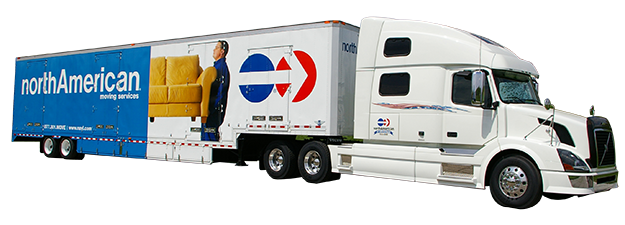
DeHaven's Transfer & Storage is a 75-year-old Triangle-based commercial mover and North American Van Lines agent specializing in laboratory, healthcare, and commercial relocations across Durham, Chapel Hill, Raleigh, and the Research Triangle.
Subscribe to DeHaven's Transfer & Storage's Blog




Comments