Library moves are unlike any other commercial relocation. The work isn't measured in cubic feet or pieces of furniture, it's measured in whether every book, journal, and archive item ends up on the right shelf in the right order in the right room. DeHaven's Transfer & Storage has been handling library and records moves across North Carolina for more than seventy years, including extensive work for Duke University, UNC, and NC State. Our team specializes in the sequence preservation, careful packing, custom carting, and shelving installation that library projects require. Whether you're relocating an academic research library, a public library, a corporate archive, or a special collection, we have the protocols, equipment, and references to handle the project the way it needs to be handled.
Trusted by Major Universities and Research Libraries
Over more than seven decades in business, DeHaven's has handled library and archive moves for some of the most demanding clients in North Carolina. Our work for Duke University, UNC, and NC State spans decades of academic, research, and special collection relocations across multiple buildings, departments, and project types. Beyond the universities, we've handled corporate archive moves, public library transitions, school library relocations, and specialty collection projects for clients across the state. These credentials reflect what we bring to every library move: meticulous sequence preservation, custom equipment, careful handling of fragile and high-value materials, and accountability through every phase of the project.
Library Moving Services
Our library moving team handles every aspect of a library or archive relocation:
- Pre-move planning, sequencing, and project management
- Color coding and shelf-by-shelf labeling systems
- Custom book carts and cradle systems for in-transit organization
- Sequence-preserving pack-out and pack-in protocols
- Disassembly and reinstallation of stacks, shelving, and library furniture
- Space planning and shelving layout coordination
- Fragile, rare, and special collection handling
- Climate-controlled transport for sensitive materials
- Microfilm, manuscript, and archive moves
- Records and document moves
- Short-term and long-term library storage
- Furniture and casework installation at the new location
- Final shelving alignment and post-move quality checks
Types of Libraries and Collections We Move
Academic and Research Libraries
Academic library moves are our most common library project type. We've handled extensive work for Duke University, UNC, and NC State, including full library relocations, departmental moves, special collection transitions, and the kind of complex, multi-phase projects that come with major university construction and renovation cycles. We coordinate around academic calendars, work in occupied buildings when needed, and maintain the strict sequence and organizational standards that academic librarians require.
Public Libraries
Public library moves often involve coordinating around community access, donation handling, friends-of-the-library volunteer involvement, and the timing pressures that come with grant-funded or referendum-funded projects. Our team handles full branch relocations, main library moves, and renovation-related collection storage with the same sequence-preservation protocols we bring to academic work.
School Libraries and Media Centers
School library and media center moves require coordinating around the academic calendar, working over breaks or summer, and handling the mix of books, technology, and student-accessible materials that define modern school libraries. Our team is comfortable working in school environments and meeting the documentation and access requirements that K-12 facilities require.
Law, Medical, and Corporate Libraries
Specialty libraries supporting law firms, medical facilities, and corporate research operations have their own demands, including confidentiality protocols, chain-of-custody for restricted materials, and the integration with modern records and digital systems that these libraries typically maintain. Our team handles specialty library moves with the protocols and discretion these settings require.
Special Collections, Archives, and Manuscripts
Rare books, manuscripts, archive materials, and special collections require careful handling beyond standard library protocols. Our team has experience with custom crating, climate-controlled transport, and the sequencing and inventory requirements that come with moving items of significant historical, cultural, or financial value. For projects involving items requiring conservator coordination, we work with your specialists to integrate the move with their handling protocols.
How We Preserve Sequence and Organization
The biggest concern in any library move is whether materials end up in the right place in the right order. Our protocol is built around making sure they do. Before the move, we work with your library staff to develop a labeling and color-coding system that maps every shelf at the origin to its destination at the new location. During pack-out, books and materials are loaded onto custom carts in their existing shelf order and labeled with their destination. During transport, our air-ride trucks protect the materials in transit. At the destination, books are unloaded and reshelved in the exact order they came off the original shelves, with quality checks to confirm placement before the project is closed.
The result is a library that's ready to use immediately at the new location, with collections in the same order your patrons and researchers expect.
Library Furniture, Shelving, and Casework
Library moves often involve more than books. Stacks, shelving, study carrels, reading room furniture, casework, and specialty library fixtures all need to be disassembled, transported, and reinstalled at the new location. Our team handles full library furniture installations alongside the collection move, working from your floor plan or your designer's plan. For modular and systems library furniture, our installation crews follow manufacturer specifications for assembly and placement. Learn more about our Modular Furniture Installation services.
Library Storage and Climate-Controlled Warehousing
Many library moves involve a phase where collections need to be stored during a renovation, construction project, or multi-phase transition. Our Durham warehouse offers climate-controlled, monitored, alarmed, and surveilled storage with fire suppression and the staging capacity to support large multi-phase projects. We can store books and materials by sequence so that retrieval and reshelving stay organized, and we provide secure handling for rare or sensitive items. Whether you need short-term storage during a building renovation or longer-term warehousing during a multi-year project, our team can build a storage solution to match. Learn more about our Storage services.
Our Specialized Fleet and Equipment
Library moves require specific equipment to be done well:
- Air-ride suspension trucks for vibration-free transport of books and fragile materials
- Climate-controlled trailers for sensitive collections, manuscripts, and special items
- Custom book carts and cradle systems sized for shelving sequence preservation
- Lift gate trucks for safe loading and unloading of carts and equipment
- Padded blankets, shrink wrap, and shock-absorbing materials for in-transit protection
- Custom crating capabilities for rare books, manuscripts, and special collection items
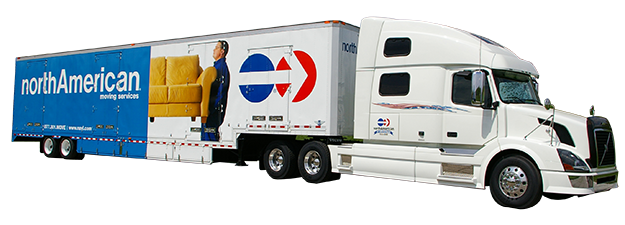
As a North American Van Lines agent since 1960, we also have access to NAVL's specialized equipment network for moves requiring additional capacity or specialty resources beyond our local fleet.
Service Area
DeHaven's provides library moving services throughout North Carolina, including the Triangle (Durham, Raleigh, Chapel Hill, Cary, Apex, and the surrounding communities), the Piedmont Triad (Greensboro, Winston-Salem, High Point, Burlington, and the surrounding area), the Charlotte Metro, the Wilmington area, and points across eastern and western North Carolina. Through our North American Van Lines partnership, we handle interstate library moves to and from any location in the United States, and we coordinate international library and archive moves through NAVL's worldwide network.
Frequently Asked Questions
How do you keep books in the right order during a move?
We use a combination of color-coding, shelf-by-shelf labeling, and custom book carts that preserve sequence from origin to destination. Before the move, our team works with your staff to map every shelf at the origin to its location at the new building. Books are loaded onto carts in their existing order, transported with sequence intact, and reshelved at the destination in the same order. We perform quality checks at the new location to confirm sequence before closing the project.
Can you handle rare books, manuscripts, and special collections?
Yes. We have experience with custom crating, climate-controlled transport, and the sequencing and inventory requirements for items of significant historical, cultural, or financial value. For projects involving items that require conservator coordination, we work with your specialists to integrate our move protocols with their handling requirements.
Do you work with academic libraries during the academic year?
Yes. Many academic library projects require working in occupied buildings during the academic year, and we coordinate around library hours, class schedules, and departmental access requirements. We also handle larger projects scheduled around academic breaks when full-building access is available.
Can you handle the shelving installation and the book move as one project?
Yes. Many of our library projects include both the collection move and the shelving, casework, and library furniture installation as a single integrated project, with one move coordinator managing both pieces. This simplifies scheduling and accountability compared to using separate vendors for the move and the install.
Do you provide certificates of insurance and other documentation?
Yes. We routinely provide certificates of insurance, valuation coverage documentation, project insurance, and any other paperwork your university, school district, library system, or building management may require for the work to proceed.
How far in advance should we book a library move?
For most library projects, we recommend booking 8 to 16 weeks in advance to allow time for proper sequencing, planning, and coordination. Larger projects (full academic library relocations, multi-phase moves with construction coordination) often require 6 to 12 months of lead time. Smaller branch or departmental moves can sometimes be scheduled with shorter notice.
Can you store our collection during a renovation or construction project?
Yes. Our Durham warehouse offers climate-controlled, monitored, alarmed, and surveilled storage with fire suppression. We can store collections by sequence to support orderly retrieval and reshelving, and we provide secure handling for rare or sensitive items.
Request a Library Moving Quote
Every library move is different, and we build custom quotes based on the size and type of collection, the scope of the project, the timeline, and any furniture installation, storage, or specialty handling requirements. To request a quote, fill out our project quote form or call our commercial team directly. We'll schedule a walkthrough of your current and new library spaces, review the collection and project details, and put together a detailed proposal so you know exactly what to expect from a team that's been handling specialty commercial moves since 1951.