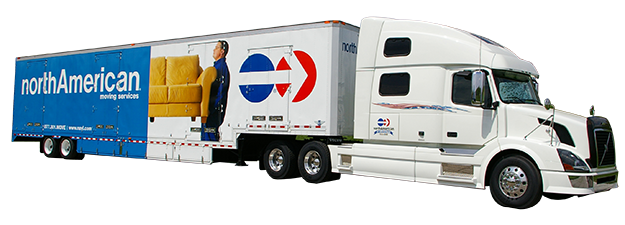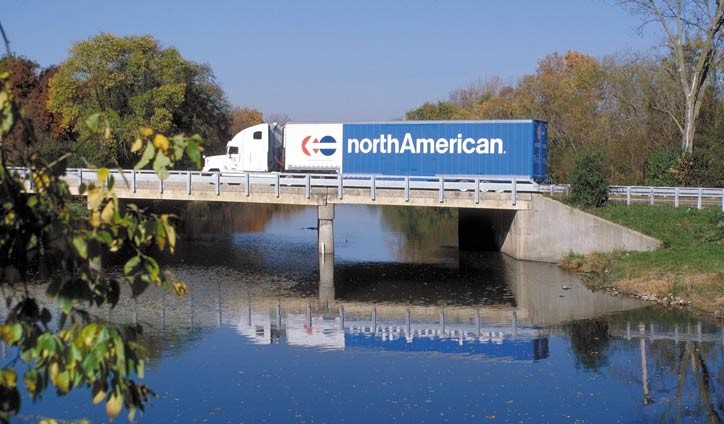
Moving from Raleigh to New York City is one of the most logistically complex interstate moves we handle at DeHaven's Transfer & Storage. NYC is unlike any other destination in the country: the rent, the buildings, the parking, the unions, the certificate requirements, the elevator rules. The mover you choose matters more here than almost anywhere else. DeHaven's has been a family-owned moving company based in Durham since 1951, and as a North American Van Lines agent since 1960, we coordinate moves to New York City through one of the most experienced interstate networks in the country. Whether you're relocating for a career in finance, media, healthcare, technology, fashion, the arts, or any other reason, our team has the experience and resources to handle a New York move the right way.
About the Move: Raleigh to New York City
The drive from Raleigh to New York City covers roughly 500 to 515 miles. The standard route runs north on I-85 to I-95, then up the East Coast corridor through Richmond, Washington DC, Baltimore, Wilmington, Philadelphia, and Newark before crossing into NYC. Total drive time is 8 to 11 hours depending on traffic, which is heavy throughout the I-95 corridor and especially severe approaching the city.
For most household moves, packing and loading happen at your Raleigh-area home over one or two days, the truck travels north (often overnight to avoid daytime traffic on I-95), and delivery to NYC typically happens within 2 to 7 business days of pickup. Larger or more time-sensitive moves can be scheduled as dedicated trips. Smaller shipments often consolidate with other moves traveling the same direction, which extends the delivery window but reduces cost significantly.
Raleigh and NYC are in the same time zone (Eastern), which simplifies scheduling and communication compared to longer-distance moves.
What to Know About Moving to New York City
New York City is the largest city in the United States, with about 8.3 million residents across five boroughs and over 20 million in the broader metro area. It is also one of the most expensive places to live in the country, and the operational realities of moving here are unlike anywhere else.
Cost of Living
NYC runs roughly 130 percent above the national average overall, with housing as the overwhelming driver. Rent is the main shock for anyone relocating from the Triangle. Average one-bedroom rent in Manhattan runs $4,000 to $4,500 per month, in Brooklyn $3,500 to $4,000, in Queens $2,400 to $2,900, in the Bronx around $2,100, and in Staten Island around $2,000. Studio apartments and shared apartments offer some relief but still cost more than equivalent housing in almost any other US city. Sales tax is also higher (around 8.875 percent in NYC), and groceries, utilities, and services all run noticeably above the national average.
Income Required to Live Comfortably
Most NYC budgeting guides suggest a single adult needs $90,000 to $140,000 to live comfortably depending on borough and lifestyle, with $100,000+ generally considered the threshold for solo Manhattan living. Couples typically need $140,000 to $180,000 combined, and families of four need $170,000 to $220,000 minimum. Income that supports a comfortable lifestyle in Raleigh often supports a much tighter lifestyle in NYC.
The Five Boroughs
Where you live in NYC dramatically affects every part of daily life. The five boroughs are:
- Manhattan: The most expensive, the most central, the most iconic. Best for those whose work, social life, or career requires being at the center of things.
- Brooklyn: Diverse and rapidly evolving. Williamsburg, DUMBO, Park Slope, and Cobble Hill carry Manhattan-level prices while neighborhoods like Bay Ridge, Sunset Park, and Bushwick remain more affordable.
- Queens: The most ethnically diverse borough and one of the better value plays. Astoria, Long Island City, and Forest Hills are popular among relocators.
- The Bronx: Generally the most affordable borough by rent, with strong transit access to Manhattan from the south Bronx.
- Staten Island: The least populous and most suburban borough, accessible by ferry or the Verrazzano Bridge.
Public Transit and Cars
NYC has the most comprehensive public transit system in the United States. The subway, bus network, and commuter rail (LIRR, Metro-North, NJ Transit) make car ownership unnecessary for most residents. In fact, owning a car in NYC is often more trouble than it's worth: parking is expensive (often $300 to $700 per month for a garage spot) or impossible, street parking requires moving the car for street cleaning, insurance costs are higher, and the subway is usually faster than driving anyway. Many people relocating to NYC sell or store one or both vehicles before moving.
New York Driver's License and Vehicle Registration
If you do bring a vehicle, New York requires new residents to obtain a New York driver's license within 30 days of establishing residency and register vehicles within 30 days. New York has a graduated insurance and registration cost structure that runs higher than North Carolina's.
Climate
NYC summers are hot and humid (similar to or slightly milder than Raleigh) but winters are significantly colder, with regular snow, ice, and sub-freezing temperatures from December through March. If you're moving during winter, build extra time into your schedule for potential weather delays along the I-95 corridor and at the destination.
New York City Logistics: What Movers Need to Plan For
NYC has more move-day logistics than any other city in the country. An experienced mover plans for all of it in advance. Here's what's involved.
Building requirements.
Almost every NYC apartment building (rental, condo, co-op) has formal move-in policies. These often include a certificate of insurance with specific minimum coverage amounts naming the building, management company, and sometimes the building's owners as additional insureds. Many buildings also require moving deposits ($500 to $1,000+, sometimes non-refundable), move-in fees, and signed building rules acknowledgments. We provide all required documentation, but knowing your building's specific requirements in advance is essential.
Freight elevator reservations.
Most NYC apartment buildings require freight elevator reservations, often only available during weekday business hours (typically 9am to 4pm, Monday through Friday). Weekend moves are simply not allowed in many buildings. Booking your elevator slot weeks in advance is standard. Some popular buildings book out 4 to 6 weeks ahead.
Walk-up buildings.
Many NYC apartments are in walk-up buildings without elevators. Five-floor walk-ups are common. Stair charges apply, and the move physically takes longer.
Loading zones and parking.
Moving trucks cannot park wherever they want in NYC. Many streets have no loading zone, no metered space, or active enforcement that makes truck parking impossible. Some buildings require shuttle service from a larger truck staged elsewhere (sometimes hours away from Manhattan) to a smaller vehicle that can navigate to your front door. Some neighborhoods, especially in Manhattan, require specific parking permits or police involvement for moving day.
Co-op approvals.
If you're moving into a co-op, the building may have approval requirements that extend to your mover. Some co-ops require approved vendor lists. Most require the standard certificate of insurance.
Doormen, supers, and tipping.
NYC doormen, building superintendents, and porters typically expect to be involved in move-in coordination, and tipping is customary. Your move coordinator can advise you on local norms.
Union considerations.
New York has a strong moving industry union presence. While not all NYC buildings require union movers, some commercial buildings and certain residential buildings do. Verify with your building before move day.
Bridge and tunnel logistics.
Depending on your exact destination, the route into Manhattan may involve specific bridges, tunnels, or restrictions. The George Washington Bridge, Lincoln Tunnel, Holland Tunnel, and Queens-Midtown Tunnel all have height, weight, and time-of-day considerations for commercial trucks.
Our Long-Distance Moving Services
DeHaven's handles every part of an interstate move from Raleigh to NYC:
- In-home estimates with detailed written quotes
- Full-service packing, partial packing, or owner-packed options
- Professional packing materials and supplies
- Custom crating for antiques, fine art, and high-value items
- Loading and unloading by trained, uniformed crews
- Air-ride suspension trucks for the long drive
- Vehicle shipping coordination through NAVL
- Online shipment tracking through the NAVL network
- Short-term and long-term storage in Durham for between-home transitions
- Specialty moves involving pianos, safes, large fitness equipment, and other heavy or fragile items
- Valuation coverage options
- Certificate of coverage documentation for NYC buildings, with specific named-additional-insured requirements
- Final placement of furniture and unpacking services at the destination
Your Move Coordinator: Your Single Point of Contact
Every interstate move at DeHaven's is assigned a dedicated move coordinator who manages the project from your initial estimate through final delivery. For a NYC move, this is essential. The destination logistics (building scheduling, certificate requirements, freight elevator reservations, move-in fees, building rules, loading zone arrangements, shuttle service if needed) all need to be coordinated weeks in advance. Your coordinator handles those communications with your NYC building manager directly so you don't have to manage the back-and-forth from 500 miles away.
If something needs to change during the project (timing shifts, additional items, storage between dates), one phone call handles it.
Storage During Your Move
NYC moves frequently involve a timing gap between your Raleigh move-out date and your NYC move-in date. Co-op approvals can take weeks, building elevator availability can be limited, and lease start dates rarely line up with move-out dates exactly. Our Durham warehouse offers short-term and long-term storage in monitored, fire-protected containerized vaults to bridge that gap. We can hold your belongings for a few days, a few weeks, or longer, and dispatch them to NYC when your building can accept the delivery. Learn more about our Storage services.
Why DeHaven's for Your Raleigh-to-NYC Move
NYC moves involve more documentation, scheduling, and logistical coordination than almost any other destination. The mover you choose either handles all of it cleanly or creates a nightmare on move day.
DeHaven's brings:
- 70+ years of family-owned operations in North Carolina
- North American Van Lines agency since 1960, with full federal interstate authority and the resources of a national network
- A dedicated move coordinator on every interstate move
- Trained, uniformed, employee crews (not day labor)
- Temperature-managed warehouse storage in Durham for between-move staging
- Valuation coverage options at the levels NYC buildings require
- The experience to handle NYC-specific logistics including building documentation, freight elevator coordination, certificate of coverage requirements, walk-up buildings, shuttle service, and the realities of moving into the most demanding destination in the country
Frequently Asked Questions
How long does the move from Raleigh to NYC take?
The drive itself is 8 to 11 hours, depending on traffic along the I-95 corridor. For most household moves, delivery to NYC happens within 2 to 7 business days of pickup, depending on the size of your shipment, whether it's a dedicated or consolidated trip, building elevator availability, and any other destination scheduling factors.
How much does a Raleigh-to-NYC move cost?
Long-distance interstate moves are priced based on the weight of your shipment, the distance, the services included (packing, crating, storage, vehicle shipping, stair charges, shuttle service), and the time of year. NYC moves often include additional costs for stair charges (in walk-up buildings), shuttle service (when trucks can't access the building directly), and the documentation work required for building compliance. Your written estimate is built after our move coordinator scopes the project. Free, no-obligation.
Will you provide a certificate of insurance for our NYC building?
Yes. NYC building certificates of insurance are one of the most common documentation requests we handle. We provide certificates with specific coverage amounts, additional insured language, and any other details your building management or co-op board requires. We can typically issue these within one business day of receiving your building's requirements.
Do you handle freight elevator scheduling?
Yes. Your move coordinator works with your building's management to reserve the freight elevator for your move-in date and time. Most NYC buildings only allow moves during weekday business hours, and many require advance reservations. We plan around your building's specific availability.
What if our building doesn't allow a full-size moving truck?
This is common in Manhattan and parts of Brooklyn, where street access for a 53-foot truck isn't possible. We arrange shuttle service from a larger truck staged elsewhere (often in New Jersey or the outer boroughs) to a smaller vehicle that can navigate to your building's front door. This adds cost and time but is standard for many NYC deliveries.
Can you handle walk-up buildings?
Yes. Walk-up buildings without elevators are common in NYC, and our crews are equipped and trained for stair moves. Stair charges apply based on the number of flights and the volume of items.
What's the best time of year to move from Raleigh to NYC?
Spring and fall offer the most comfortable weather along the route. Summer is the peak moving season nationally, plus NYC's summer is its busiest season for lease turnover, which means tighter building scheduling. Winter (December through March) brings real weather risks along the I-95 corridor through Pennsylvania, New Jersey, and into NYC. If you have flexibility, mid-spring or early fall is ideal.
Can you store our belongings if our NYC building isn't ready?
Yes. This is one of the most common issues with NYC moves. Co-op approvals get delayed, lease start dates shift, building elevator availability creates constraints. Our Durham warehouse offers short-term and long-term storage in monitored, fire-protected containerized vaults. We hold your belongings until your building can accept delivery.
Should we ship our car or drive it?
Most NYC residents don't own cars because parking is expensive and the subway is faster than driving anyway. If you're keeping a car, vehicle shipping through our NAVL partnership is available. Many customers ship one car and sell the other before moving. Worth thinking about before the move.
Are you licensed to do interstate moves?
Yes. DeHaven's holds full federal interstate moving authority for household goods (USDOT 1184464, MC-697479) and is a registered agent of North American Van Lines. All licensing and credentialing documentation can be provided on request.
Request a Raleigh-to-NYC Moving Quote
Every NYC move is different, and we build custom quotes based on the size of your move, services needed, timeline, destination borough, and building requirements. To request a quote, fill out our form or call our team. We'll schedule a walkthrough of your Raleigh-area home, scope the project including any NYC-specific logistics, and put together a detailed written estimate so you know exactly what to expect. From your first call to your final delivery in New York, you'll work with a family-owned team that's been handling moves since 1951.